Lead
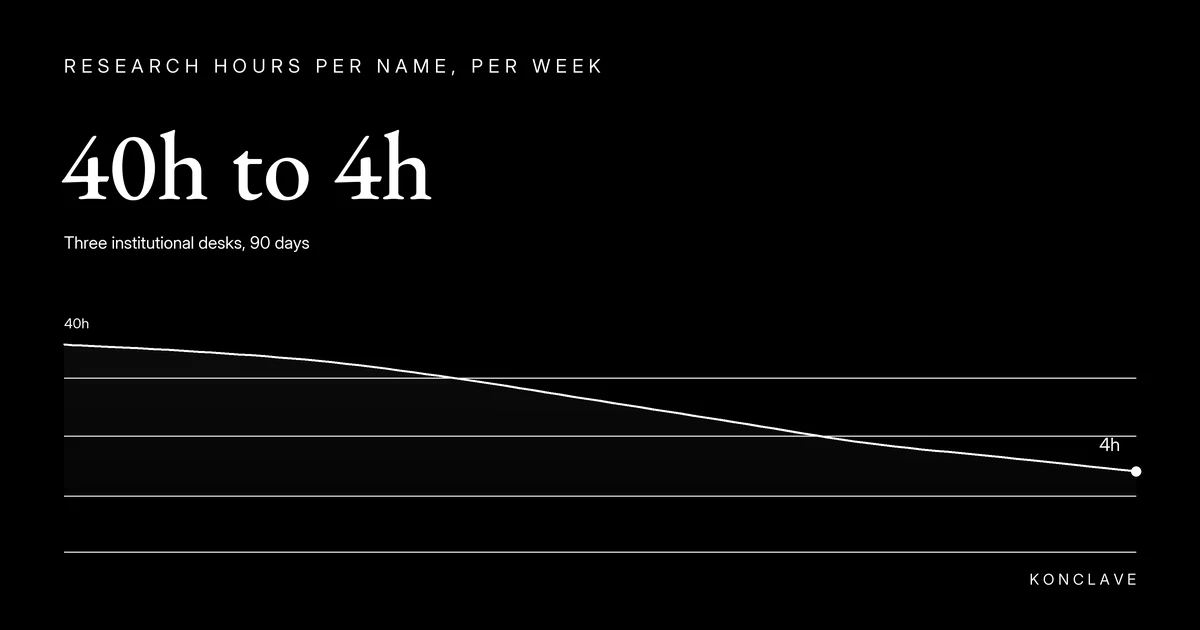
Over the past 90 days, Konclave instrumented the research workflows of three institutional desks, a long-only equity manager, a multi-strategy pod, and a family office, task by task. Total research hours per name covered fell from roughly 40 per week to roughly four. The collapse was not evenly distributed. Four tasks absorbed almost all of it.
What actually disappeared
The tasks that vanished were the ones with a defined input and a defined output: first-pass filings reads, peer comparison tables, monitoring queue triage, and the weekly recap email. Together they accounted for 31 of the 36 hours removed.
The tasks that survived were the ones with no defined output: deciding what the variant perception actually is, sizing a position against a portfolio’s existing factor load, and picking up the phone to a management team. Hours there were flat or slightly up.
Why this is not a productivity story
The desks did not bank the time. All three redeployed it into coverage breadth. The long-only manager went from 40 names under active coverage to 110, with the same headcount. The binding constraint moved from hours to conviction: the desk’s bottleneck is now deciding which of ten machine-flagged anomalies deserves a human week.
What we are watching
Whether coverage breadth holds through the first drawdown. Breadth is cheap in a rally. The test is whether a desk keeps 110 names warm when 30 of them are simultaneously against it, and whether the monitoring queue surfaces the right three.
This is a demonstration article published to show the format of Konclave News. Figures are illustrative of engagements across our early-access cohort, not a single client.